
It’s impossible to visit Bhutan without noticing the prayer flags. There are literally millions of them, strung everywhere across the landscape. What is their significance?
Fortunately, I found a comprehensive article, “Prayer Flags of Bhutan: Spirituality and Meaning,” in the May-June 2026 issue of Tashi Delek, the inflight magazine of Drukair, the Royal Bhutan Airlines, while flying in. I will try to summarize the important points from that article.
Prayer flags hold profound spiritual significance and cultural meaning, rooted in centuries of Buddhist practice. Historically, they go back hundreds of years to the pre-Buddhist times, and today are associated with Vajrayana Buddhism for rapid spiritual awakening (https://www.ourbuddhismworld.com/vajrayana). It is said the flags invoke the symbolic meaning of the connection between the physical and spiritual realms.
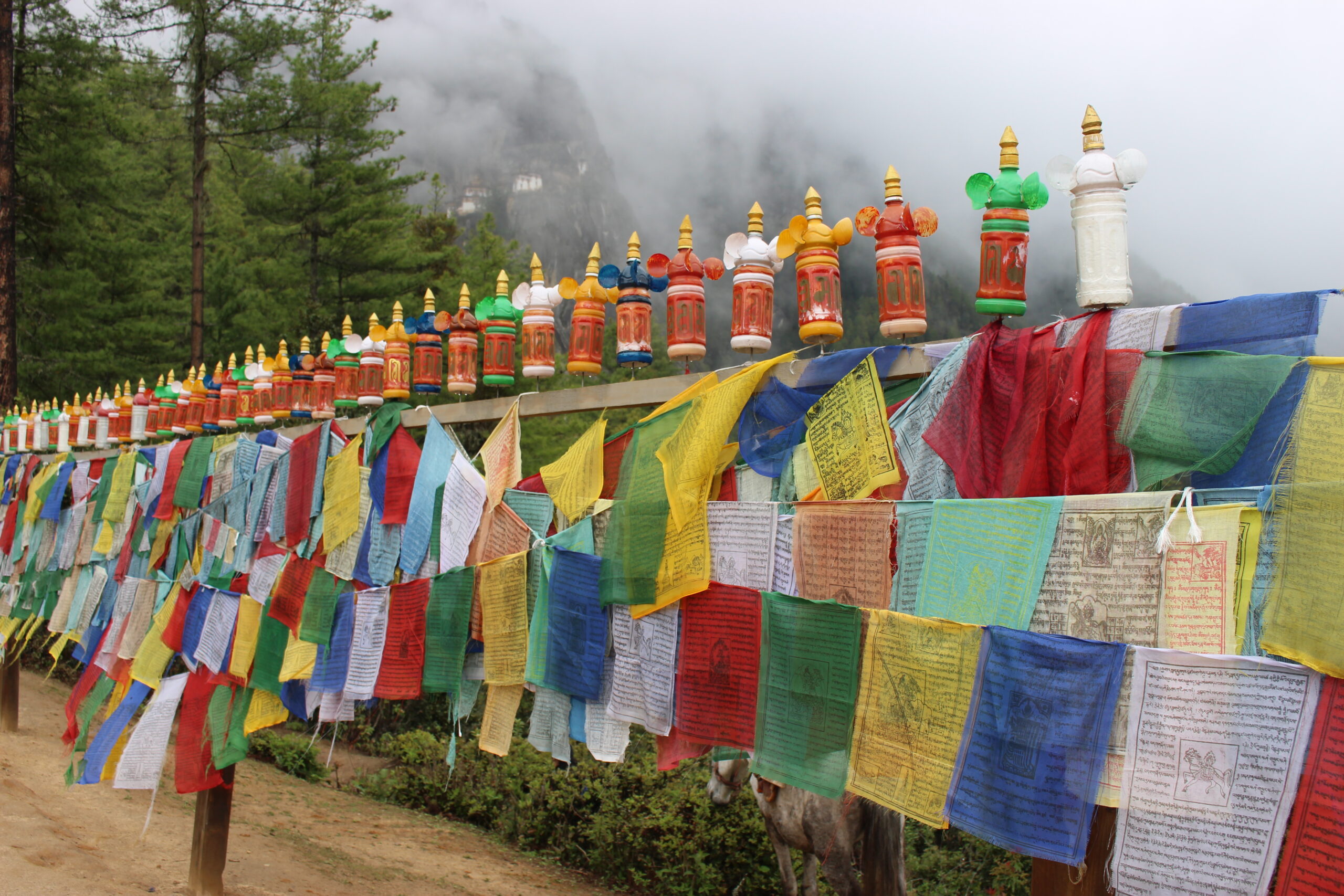
This example was photographed in May, 2018 on the trail to the Tiger’s Nest monastery complex in the upper Paro Valley. Note the five colors:
Blue is for space or sky. It symbolizes peace and tranquility, which hopefully leads to health and longevity.
White represents air. It symbolizes purity and wisdom.
Red is understandably for fire. It symbolizes life force, energy, warmth, and compassion.
Green represents water (blue having already been taken). It symbolizes compassion and loving-kindness.
Finally, yellow is for earth. It symbolizes abundance, nourishment, growth and prosperity.
The shape and manner of display is also important. Lung Dar or Lungta flags are horizontal with all five colors, normally hung on ropes or mounted on poles.
Darchor flags are vertical attached to a pole planted in the ground. They are typically erected during community gatherings and festivals, used during ceremonies and rituals, and serve as offerings to spirits and deities.
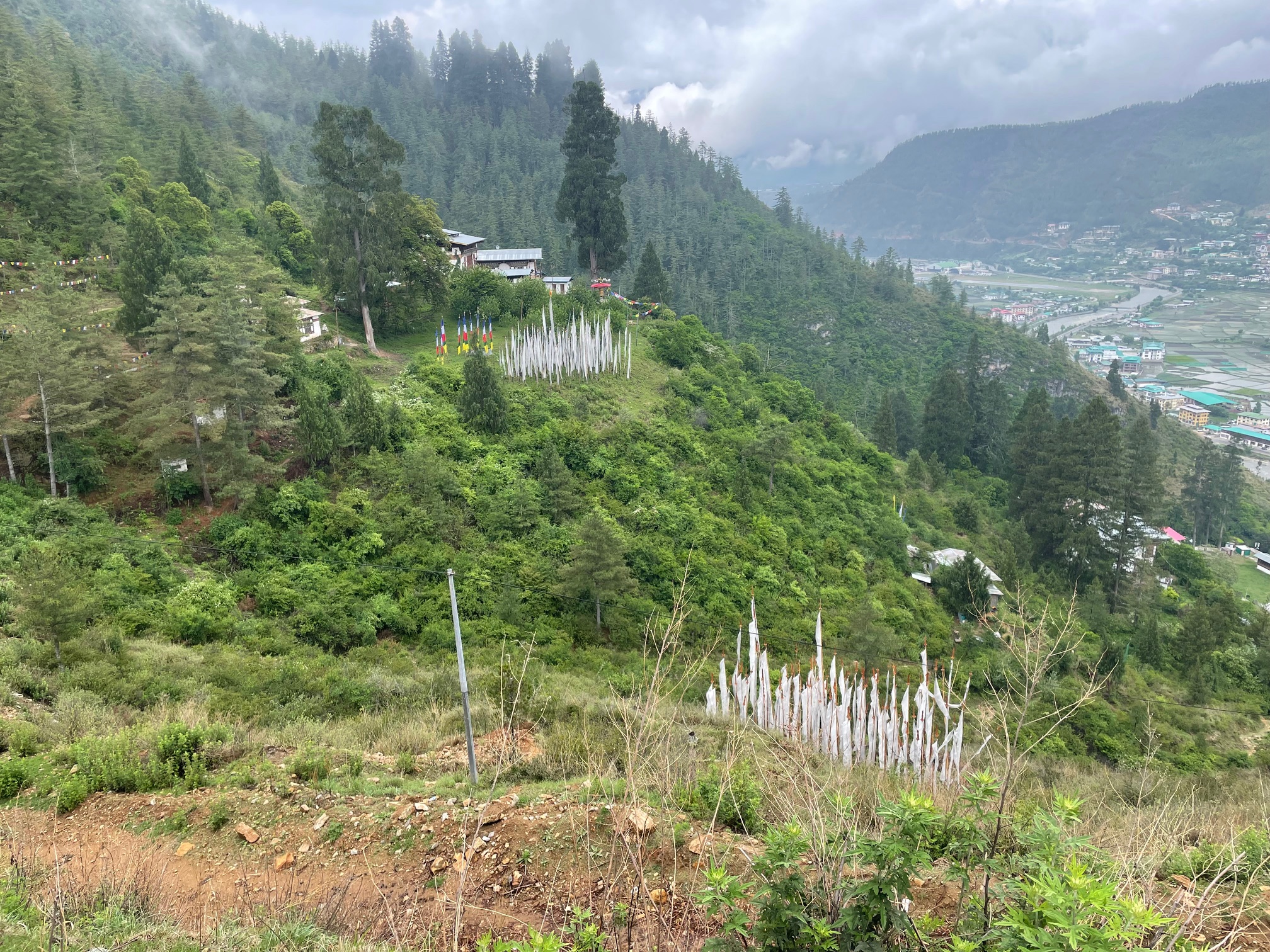
Manidhar flags are very tall vertical flags mounted to long poles in batches of 108 (an auspicious number in Buddhism). They honor a deceased person, hopefully as a guide toward an advantageous rebirth in the next life. Those are clusters of Manidhar flags on the hillside at right.
Lhadhar flags are the largest vertical flags attached to very tall poles. The are often supplemented with ribbons and put in front of important places. They symbolize spiritual strength and sovereignty.
Goendhar flags are small, mounted in the apex of a rooftop of traditional Bhutanese houses. They are hoisted as blessings of peace, protection, welfare, prosperity and harmony within families.
Gyeltshen Tsemo flags are tall, cylindrical shaped that bring together the five colors in strips of brocade cloth. They’re often used in monastic rituals, public ceremonies, and processions. They symbolize sacredness, reverence and cultural celebration.
Prayer flags can be purchased by tourists, although it is important to remember that they are considered holy and are to be treated with respect.
This is another example that we are all interconnected with each other, to nature, and the only home planet we have. Mindful travels!